
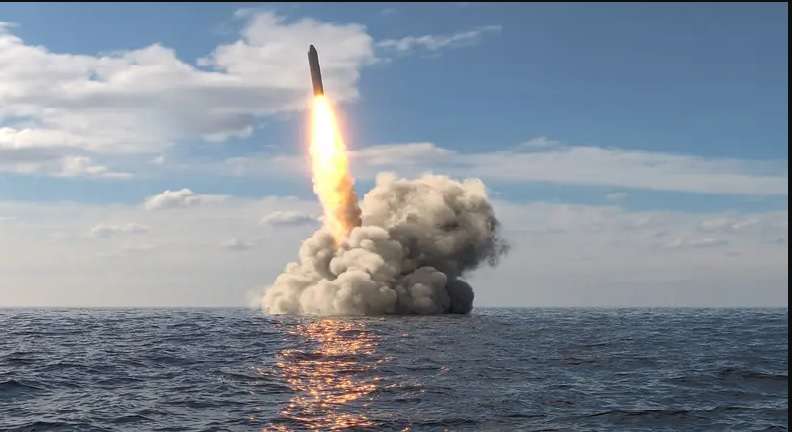
INS Arighat Strengthens India’s Nuclear Defense: K-4 SLBM Test a Major Success
On November 27, India successfully test-fired the K-4 submarine-launched ballistic missile (SLBM) from its newly commissioned INS Arighat, marking a major milestone in the country’s defense capabilities. With a range of 3,500 kilometers, the K-4 missile gives India a strong second-strike nuclear capability, enhancing its ability to retaliate in the event of an attack.
This test, confirmed by sources in the defense sector, shows India’s continued progress in strengthening its nuclear deterrence, ensuring that the country can respond effectively if ever threatened. The successful test was a step forward for India’s nuclear triad, which involves land, air, and sea-based nuclear systems. The results of the test are still being reviewed, but it signals a clear message to any adversary: India is ready and capable of protecting itself.
INS Arighat: A New Power in the Ocean
The launch of the K-4 missile was conducted from INS Arighat, India’s second nuclear-powered ballistic missile submarine (SSBN). Commissioned in August 2024, INS Arighat is a significant addition to India’s naval capabilities. It joins INS Arihant, India’s first nuclear-powered SSBN, which has been operational since 2016.
INS Arighat is much more advanced than its predecessor, incorporating modern technologies developed in India. Both submarines weigh around 6,000 tons and are powered by light-water nuclear reactors that provide them with enough energy to remain submerged for long periods—unlike traditional diesel-powered submarines that need to surface frequently. These submarines can stay hidden underwater for longer, which is crucial for maintaining a strong deterrent.
A Powerful Deterrent for the Future
The K-4 missile test not only shows India’s growing technological capabilities but also strengthens the country’s nuclear defense. The K-4 has a much longer range than the older K-15 missile, which had a range of 750 km. Now, with the K-4, India can target Pakistan entirely and reach large parts of China, significantly boosting its reach and nuclear deterrence.
India follows a “no-first-use” policy when it comes to nuclear weapons. This means the country will only use nuclear weapons in retaliation if attacked first. Having submarines like INS Arighat that can launch nuclear missiles from underwater guarantees that India will always be able to respond, even if other systems are attacked. This is India’s way of ensuring that it has a second-strike capability, which is the backbone of its nuclear strategy.
What’s Next? The Future of India’s Nuclear Submarines
The success of INS Arighat and the K-4 missile is just one part of India’s ongoing plans to strengthen its defense. In the coming years, India will see more nuclear submarines like the INS Aridaman, which is expected to join the fleet by 2025. This submarine will also be armed with K-4 missiles, continuing the trend of boosting India’s underwater nuclear power. Additionally, India is working on the K-5 missile, which will have an even greater range of 5,000 kilometers, further extending the country’s reach.
A Stronger Defense for a Safer India
The successful test of the K-4 missile represents more than just a technological achievement—it highlights India’s commitment to safeguarding its national security. With the INS Arighat now in service, India has a reliable and powerful deterrent force, ensuring that any nuclear attack against the country will be met with a decisive and catastrophic response.
India’s nuclear policy remains rooted in peace, but with a growing arsenal of advanced missiles and submarines, the country is ensuring it has the strength to protect itself if necessary. The successful test of the K-4 missile is a message to the world: India is ready to defend its sovereignty and will not hesitate to respond to any threat.
As India continues to develop and refine its nuclear capabilities, its position as a responsible nuclear power grows stronger. With INS Arighat and the K-4 missile, India’s defense has never been more secure.
